About
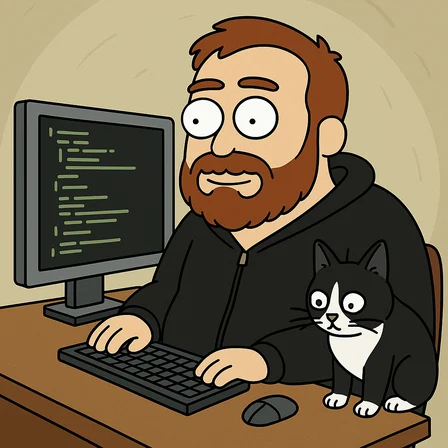
Hey, I'm Roger Stringer, an AI Product Engineer, Writer, Speaker, and Foodie.
I'm an AI Product Engineer, writer, foodie and speaker based in Penticton, British Columbia. When I'm not at a keyboard, I'm probably in the kitchen, at a campsite, watching a movie with my girlfriend, or hunting down a good comic book.
Outside of work, I'm a dad, a music obsessive, a film buff, and a camper. I share life with my partner Jen and our combined crew of kids, and we spend a lot of our free time cooking, exploring the outdoors in our 1999 Honda Stepwagon, and generally making a mess of things in the best way.
This blog has been running in one form or another since 2003. It's where I write about tech, design, food, and whatever else has my attention. Older posts get cleaned up occasionally, but the archive runs deep.
What I Bring to the Table 💼
Over the past 27 years I've built products with companies of every size, scrappy startups to established enterprises, shipping things that actually scale. For the last few years that work has centered on AI: systems that hold up in production and earn their place in a real business. Anyone can ship a demo.
The deepest of those years went into telecom: more than fifteen of them on phone systems, SMS, and the messy plumbing that connects them. I worked with Asterisk and FreeSWITCH, and I got into Twilio early enough that I literally wrote the book on it. I moved into WebRTC once video landed in the browser, and I ship both sides of that world: video platforms people could join from a browser tab, and dialer systems that have to place calls reliably at volume.
Real-time systems are unforgiving in a way most software isn't. When a call drops or a stream stutters, the person on the other end knows right away. Years of that taught me to think in latency, retries, and failure states, which turns out to be most of what matters when you put AI into production too.
As an AI Product Engineer, I work backwards from what the product should be, then build it end to end: frontend, backend, infrastructure, and the AI layer woven through all of it. I'm at my best when handed a rough idea and asked to make it real. That means knowing where AI creates genuine leverage and, just as importantly, where it doesn't.
In practice, that shows up as AI automation, integrating AI into the parts of a business where it compounds: lead generation, internal tooling, content pipelines, and the workflows that quietly eat a team's time. My stack here includes Claude, ChatGPT, Cursor, Hermes, MCP servers, n8n, and LangChain, among others.
And as a Fractional CTO, work I take on through Data McFly, I step into the technical leadership gap, working with founders and leadership teams to set engineering direction, make the architectural calls, and build the systems and teams that let a company scale without a full-time hire. Defining your stack, leading a migration, hiring your first engineers, or translating business goals into technical reality: the same hands-on approach, one level up. It runs on the 70/30 Method: automate the repeatable 70%, keep the decisive 30% with people.
On the technical side: JavaScript across the board (Astro, React, Datastar, Remix, Next.js, Vue, Nuxt), plus PHP, Rust, Go, and Python, with deep experience in headless architecture (Directus, Strapi, Sanity, WordPress, Shopify) and infrastructure from greenfield to legacy migration.
If any of this sounds like what you need, get in touch. I'm always happy to talk through a problem, whether it turns into work together or not.
Additional Projects 🚧
Beyond client work, I stay busy building and writing.
- I write field guides on building with AI and agents, working notes from the systems I actually ship, and I post regularly on the blog. The field guides are handy resources from various topics taken from years of practical experience so readers can learn.
- I also run Data McFly, where I take on consulting projects and write about development, automation, and AI.
- I created Get Butters, a simple event tracking dashboard app that lets users track events of all sorts, and that I use daily myself.
- The Centauri Range: a Louis L'Amour–style Western frontier saga, transplanted 200 years forward to a terraformed colony on Alpha Centauri Bb (New Meridian).
- Finally, I've authored two editions of the Twilio Cookbook for Packt Publishing.
Colophon 📖
This site is built on Astro using Emdash and deployed on Cloudflare.
UI is handled using Tailwind with DaisyUI using a custom library I built based on shadcn/ui. Then for any client-side interactivity, I use Datastar, with some vanilla JavaScript filling in the gaps in the few places it's needed.
For tooling: Cursor handles all my coding and writing, and I live in the terminal via Warp with zsh and Oh My Zsh. I use Claude Code as my main coding agent, with Codex, Grok Bot and Opencode also running as needed. I also keep a fleet of Hermes Agents on hand.
Sponsorship 🙏
If you get value from what I build or write, or just want to support an indie developer, I'd really appreciate it. You can sponsor me on GitHub ❤️. It means a lot.
Disclaimer 👀
Sometimes, I'll post affiliate links on this site. That means that if you sign up or purchase something I’ve recommended after clicking the link, I’ll make a little bit of money. The presence of an affiliate link does not increase the price you pay for an item, but in some cases it gives you a discount or bonus.
I use every product I recommend unless I’ve noted otherwise.
This site is a participant in the Amazon Services LLC Associates Program, an affiliate advertising program designed to provide a means for us to earn fees by linking to Amazon.com and affiliated sites.